By the Vijay Printing Press team, Indore · Last updated: November 2026
Packaging does more than protect a product. It creates the first physical impression of a brand and influences how customers perceive its quality. Understanding packaging finishes, foil stamping, spot UV and other premium techniques helps businesses create packaging that looks distinctive and feels valuable. Finishes such as embossing and soft-touch lamination add texture and visual appeal while improving the overall presentation of a box. Whether you are designing luxury cosmetics packaging, perfume boxes, corporate gifts or premium retail cartons, choosing the right finishing technique can make your packaging more memorable without unnecessarily increasing production costs.
Why Luxury Packaging Finishes Matter
In competitive retail markets, packaging can influence a customer’s perception before they even use the product. A carefully finished box communicates attention to detail and helps establish a consistent brand identity.
Premium finishes can highlight logos, create visual contrast and add tactile elements that make packaging more engaging. However, the objective should not be to use as many effects as possible. Each finish should support the product’s positioning and overall design.
For example, a perfume brand may use metallic foil stamping to create an elegant logo while a skincare brand may prefer soft-touch lamination for a smooth and understated appearance.
The right combination depends on the product, target audience, packaging material and budget.
1. Foil Stamping: Adding a Premium Metallic Effect
Foil stamping is a finishing process that transfers a thin decorative foil onto a packaging surface using heat and pressure. It is commonly used to create metallic details in gold, silver, copper and other available finishes.
How Foil Stamping Works
A specially prepared die applies heat and pressure to transfer the foil onto selected areas of the packaging. The result is a clean decorative impression that reflects light and creates a distinctive appearance.
Unlike conventional metallic printing, foil stamping uses a separate foil material to produce its reflective effect.
Where Foil Stamping Works Best
Foil stamping is particularly effective for highlighting specific design elements such as:
- Brand logos and names.
- Product titles and collection names.
- Decorative borders and patterns.
- Premium labels and packaging details.
- Special-edition and festive designs.
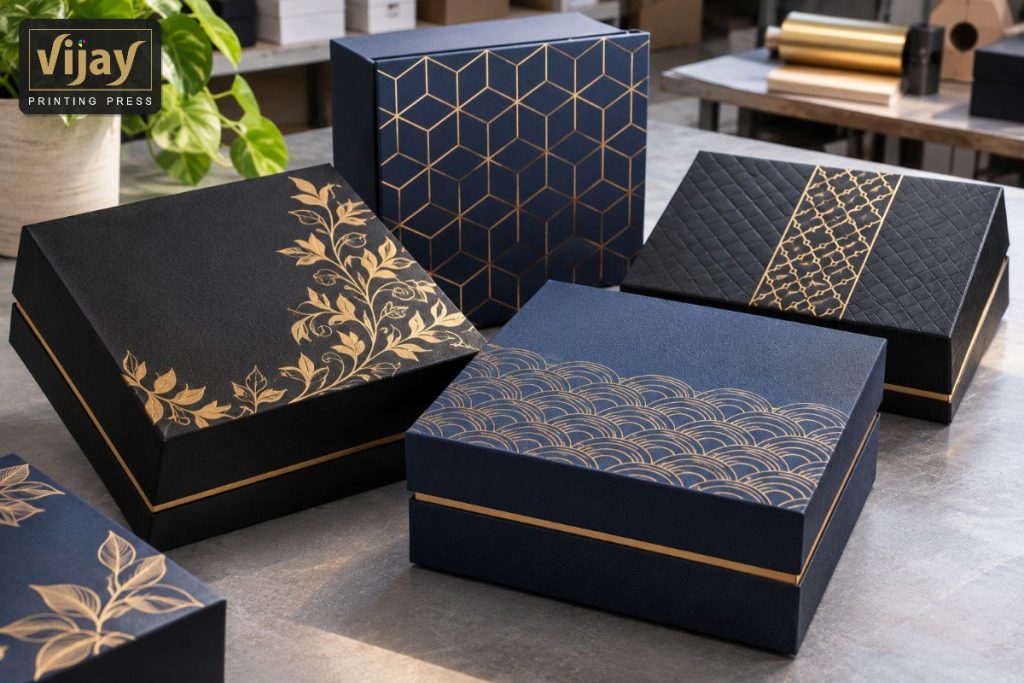
For example, a perfume box with a matte black surface and a gold foil logo can create a sophisticated appearance without requiring an overly complicated design.
What to Consider Before Choosing Foil Stamping
Foil stamping requires additional tooling and setup. The cost depends on the design size, foil type, number of areas to be stamped and production quantity.
Very fine details and extremely small text may not reproduce reliably with every foil process. The artwork should be prepared according to the printer’s specifications.
2. Embossing and Debossing: Creating Texture and Dimension
Embossing and debossing are finishing techniques that add physical depth to packaging. Instead of relying only on colour or printed graphics, they create a tactile impression through raised or recessed areas.
What Is Embossing?
Embossing raises selected elements above the packaging surface using pressure and specially prepared dies.
It is commonly used for logos, brand names, decorative patterns and important design elements. The raised surface catches light differently from the surrounding material and creates a subtle three-dimensional effect.
What Is Debossing?
Debossing creates an impression that pushes selected design elements into the material. This produces a recessed effect that can look refined and understated.
It works particularly well with minimal packaging designs where texture is more important than bright colours.
When Should You Use Embossing or Debossing?
These techniques are suitable for premium stationery, rigid boxes, luxury cosmetics packaging, invitation boxes and corporate gift packaging.
They can also be combined with foil stamping. For example, an embossed brand logo finished with gold foil can create both visual contrast and tactile depth.
However, the material thickness and surface quality must support the selected technique. A sample is useful for checking how clearly the design appears after finishing.
3. Spot UV: Highlighting Important Design Elements
Spot UV is a selective coating technique that applies a glossy finish to specific areas of a printed surface. It creates contrast between coated and uncoated sections of the packaging.
How Spot UV Works
A UV-curable coating is applied to selected parts of the design and hardened using ultraviolet light. This produces a glossy surface that stands out against the surrounding material.
Spot UV is commonly used on logos, product names, patterns and selected graphic elements.
Why Spot UV Is Popular in Luxury Packaging
Spot UV adds visual depth without requiring additional colours or complex illustrations. It is particularly effective when used on matte-laminated surfaces.
For example, a dark matte box with a glossy logo can create an elegant contrast. Similarly, a subtle spot UV pattern can make a minimal packaging design look more detailed when viewed under light.
Important Considerations for Spot UV
Spot UV works best when the selected areas are clearly defined in the artwork. Fine details and small text should be reviewed carefully to ensure the coating is applied accurately.
The placement of the glossy elements also matters. Covering too much of the surface can reduce the visual impact. Selective application usually produces a more refined result.
4. Soft-Touch Lamination: Creating a Smooth Premium Surface
Soft-touch lamination is a finishing technique that applies a specialised film to a printed surface, creating a smooth and velvety feel.
It is often chosen for packaging that needs a sophisticated tactile experience rather than a highly reflective appearance.
Benefits of Soft-Touch Lamination
Soft-touch lamination creates a distinctive surface that can make packaging feel more premium. It also provides a protective layer that helps reduce certain types of surface wear.
It is commonly used for perfume boxes, premium cosmetics packaging, gift boxes and luxury product sleeves.
The finish works particularly well with darker colours and minimalist designs. It can also be combined with foil stamping or spot UV to create contrast between smooth matte areas and reflective details.
What Should You Consider?
Soft-touch films may be more expensive than standard matte or gloss lamination. They can also show fingerprints, scuffs or marks depending on the specific material and handling conditions.
Businesses should request a physical sample before approving bulk production. This helps evaluate the texture, colour appearance and durability of the selected film.
5. Choosing the Right Finishes for Luxury Packaging Boxes
Different products require different packaging experiences. The most effective finish is one that complements the product and supports its brand identity.
For luxury packaging boxes, consider the following combinations:
| Packaging Type | Recommended Finishes | Intended Effect |
|---|---|---|
| Perfume boxes | Gold foil, embossing and soft-touch lamination | Elegant and premium presentation |
| Cosmetic boxes | Spot UV and matte lamination | Modern visual contrast |
| Jewellery boxes | Foil stamping and embossing | Refined and decorative appearance |
| Corporate gift boxes | Debossing and soft-touch lamination | Understated premium finish |
| Festive gift boxes | Metallic foil and selective embossing | Rich and celebratory appearance |
These combinations are starting points rather than fixed rules. The final selection should consider the product’s price positioning, design and intended customer experience.
6. Custom Packaging Boxes: How to Select the Right Material and Finish
Finishing techniques work differently depending on the packaging material. Selecting the right combination of board, printing and surface treatment is essential for achieving the intended result.
Finishing Options for Rigid Boxes
Rigid boxes are made using thick paperboard and are commonly used for premium products that need a sturdy structure.
They provide a suitable base for decorative paper wraps, foil stamping, embossing, debossing and soft-touch lamination.
Businesses comparing rigid box manufacturers should discuss the board thickness, wrapping material, corner construction and finishing requirements before production.
The surface material must be compatible with the selected finish. A decorative wrap that is not suitable for a particular coating or stamping process may affect the final appearance.
Finishing Options for Mono Cartons
A mono carton box manufacturer can help businesses create folding cartons with different printing and finishing combinations.
Mono cartons are commonly used for cosmetics, pharmaceuticals, personal care products and retail packaging. They can support matte or gloss lamination, spot UV, foil stamping and embossing depending on the board and production specifications.
These finishes allow brands to create attractive packaging while retaining the practical advantages of folding cartons.
Finishing for Custom Gift Packaging
Businesses looking for a custom gift box manufacturer should consider how the packaging will be opened, handled and presented.
Magnetic closures, ribbon pulls, decorative inserts and premium surface finishes can work together to create a memorable gifting experience.
The finishing should complement the box structure rather than compete with it. A simple design with carefully placed foil and a textured surface can often look more refined than a box covered with multiple decorative effects.
7. How to Balance Packaging Quality and Production Budget
Premium finishing can improve packaging presentation, but every additional process affects the overall production cost.
Foil stamping and embossing may require separate dies and additional setup. Spot UV involves a selective coating process, while soft-touch lamination may cost more than standard lamination.
The final quotation depends on the packaging dimensions, material, order quantity, design complexity and finishing specifications.
To manage costs effectively:
- Prioritise the most important brand elements for premium finishing.
- Use foil or spot UV selectively instead of covering large areas.
- Choose materials that support the intended finish without unnecessary upgrades.
- Approve a physical sample before bulk production.
- Compare quotations using identical material and finishing specifications.
A well-planned design can achieve a premium appearance without requiring every available finishing technique.
8. How Vijay Printing Press Helps With Packaging Finishing Decisions
Choosing packaging finishes requires coordination between artwork, material selection and production methods. Vijay Printing Press is an option for businesses exploring printing and packaging requirements.
As a printing press in Indore with more than 50 years behind us, we have found that finishing is where most packaging jobs succeed or fail. Cartons are first printed through our offset printing services, and the finish is chosen only after the board and artwork are fixed. If you are shortlisting a printing and packaging company, ask for finished samples rather than digital mock-ups.
Before finalising a design, businesses should identify the required box structure, surface material, colour specifications and finishing effects. This helps determine which techniques are suitable for the project.
It is also important to review a physical sample. A sample allows businesses to evaluate foil alignment, embossing depth, spot UV placement and the feel of the laminated surface before approving a full production run.
When selecting a packaging supplier, ask about finishing capabilities, material compatibility, production timelines and quality checks. Clear specifications help reduce errors and ensure that the finished packaging reflects the intended brand identity.
Common Mistakes to Avoid When Selecting Packaging Finishes
Even premium finishing techniques can produce disappointing results when they are not planned properly.
Using too many finishes: Combining foil, embossing, spot UV and multiple coatings can make a design look cluttered. Choose effects that support the overall visual direction.
Ignoring material compatibility: Not every paperboard or decorative wrap is suitable for every finishing process. Confirm compatibility before production.
Overlooking fine design details: Very small text and intricate patterns may not reproduce clearly with certain techniques. Prepare artwork according to production requirements.
Skipping physical samples: Digital previews cannot accurately communicate texture, foil reflection or embossing depth. Always review a sample for important packaging projects.
Choosing finishes without considering the audience: Packaging should reflect the product’s positioning and customer expectations. Expensive finishes are not always necessary to create a professional impression.
Conclusion: Choosing the Right Luxury Packaging Finishes
Luxury packaging finishes such as foil stamping, embossing, debossing, spot UV and soft-touch lamination help brands create distinctive packaging through visual contrast and tactile appeal. Each technique offers different advantages. Foil stamping adds metallic detail, embossing creates raised texture, spot UV highlights selected areas and soft-touch lamination provides a smooth premium surface.
The right combination depends on the packaging structure, material, product category and production budget. Rigid boxes offer opportunities for elaborate premium finishes while mono cartons provide versatile options for attractive retail packaging.
Before approving a bulk order, evaluate material compatibility, finishing costs and physical samples. Vijay Printing Press can be considered when exploring printing and packaging projects that require attention to finishing and presentation. A carefully selected combination of materials and finishes can help your packaging communicate quality while maintaining a consistent brand identity.